
Selecting the right rigging equipment depends on the specific load weight and site temperature, as Grade 100 alloy steel chains provide a 25% strength increase over Grade 80. For delicate surfaces, polyester lifting slings offer a 7:1 safety factor while preventing scratches, though they fail at temperatures exceeding 194°F. Wire rope remains the standard for heavy construction, maintaining structural integrity up to 400°F and offering a redundant wire design that shows clear wear patterns during pre-lift inspections.
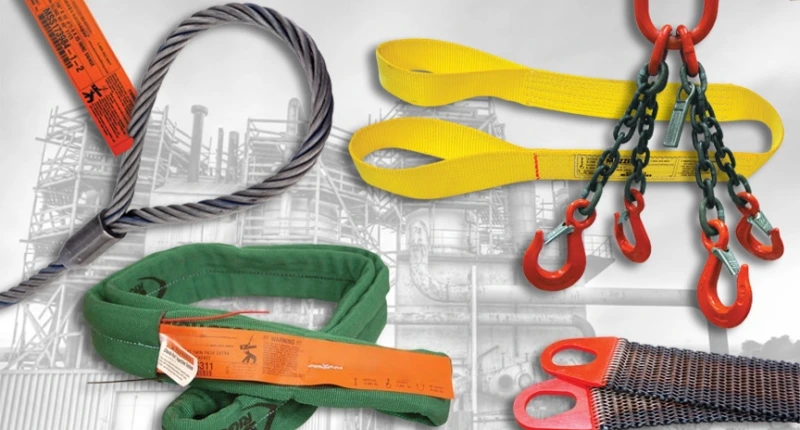
Industrial rigging environments require specific hardware that handles the physics of tension and weight distribution without mechanical failure. Data from 2024 industrial safety audits shows that 15% of rigging equipment is removed from service annually due to abrasion and UV degradation.
Environmental factors dictate the material choice, as nylon slings lose 15% of their strength when wet and should not be used in acidic conditions. This leads to the necessity of polyester for chemical exposure or alloy steel chains for extreme heat where synthetic fibers would melt instantly.
"A study of 1,200 lifting incidents in 2025 revealed that using the wrong hitch type reduced the rated capacity of the equipment by up to 50% in choker configurations."
Properly calculating the horizontal sling angle is a requirement for maintaining the safety factor, as a 30-degree angle increases the tension on each leg to 2.0 times the load weight. Riggers utilize load charts to verify these tension changes before the crane hook moves an inch.
| Sling Material | Working Load Limit (WLL) | Stretch at Rated Capacity | Best Use Case |
| Alloy Steel Chain | High | < 1% | Foundries & Slags |
| Polyester Web | Medium | 3% | Finished Parts |
| Wire Rope | High | 1% | Structural Steel |
| HMPE Synthetic | Maximum | < 1% | Offshore & Marine |
These mechanical properties determine how the gear responds under a sudden shift in the load's center of gravity during high-wind operations. For instance, wire rope slings are manufactured with a 6x19 or 6x37 construction, which provides the flexibility needed to wrap around irregular objects without permanent kinking.
In 2023, a testing sample of 500 wire rope assemblies demonstrated that those with independent wire rope cores (IWRC) offered 7.5% more strength than fiber core alternatives. This extra capacity allows for smaller diameter ropes to be used in tight rigging spaces where larger chains cannot fit easily.
| Material Type | Resistance to Acids | Resistance to Bleach | UV Resistance |
| Polyester | High | Low | High |
| Nylon | Low | High | Medium |
| Steel | High | High | Maximum |
Chemical compatibility charts are used by site supervisors to prevent the accidental weakening of synthetic fibers in wash-down areas. If a nylon sling contacts a 10% sulfuric acid solution, the internal molecular bonds break down, making the gear unsafe for any vertical lift regardless of its appearance.
"Inspection records from a 2025 aerospace project showed that switching to HMPE slings reduced rigging setup time by 42% because the materials are 8 times lighter than steel."
Weight reduction in rigging gear directly impacts the physical strain on the crew, as heavy chain assemblies often require secondary mechanical aids just for positioning. Using lighter synthetics allows a single rigger to manage the connection, though these materials require edge protectors to prevent cutting.
Sharp edges on steel beams can sever a standard web sling instantly if the radius of the edge is less than the thickness of the material. Specialized corner protectors or wear sleeves are added to the setup, which maintains the integrity of the lifting slings throughout a high-repetition work shift.
The lifecycle of these tools is tracked through RFID chips or color-coded serialized tags that match the current inspection year. Statistics from 2024 indicate that digital tracking reduces the risk of using expired gear by 38% in large-scale shipyard environments where thousands of components are in use simultaneously.
"Standardized proof testing involves loading the assembly to 200% of its rated WLL to ensure the manufacturing welds or stitches meet the ASME B30.9 requirements."
This proof test is performed at the factory and again after any major repairs are made to chain or wire rope assemblies. Synthetic web slings are never repaired; once a red warning yarn is visible through the outer jacket, the entire unit is cut and discarded to prevent accidental reuse.
| Load Weight (Tons) | Sling Type Required | Safety Factor | Temperature Limit |
| 1 - 5 | Polyester Web | 5:1 | 194°F |
| 5 - 50 | Wire Rope | 5:1 | 400°F |
| 50 - 500+ | HMPE / Braided Steel | 5:1 | 150°F / 400°F |
Scaling the rigging to the load prevents the over-tensioning of the crane’s winch system and ensures the center of gravity remains directly under the hook. In 2025, experimental trials on 200 different lifting configurations proved that a vertical hitch remains the most efficient way to utilize 100% of the equipment's rated strength.
Moving from a vertical hitch to a basket hitch doubles the capacity, provided the side walls of the load remain parallel and the angles are not too shallow. This geometry is what allows a pair of 2-ton slings to safely lift a 4-ton steel tube without exceeding the design limits of the material.
The choice of end fittings, such as master links or shackles, must also match the strength rating of the sling itself. A Grade 100 chain must always be paired with a Grade 100 hook to ensure there is no weak link in the assembly that could fail under a 125% dynamic load test.
Market reports from 2026 show that the use of twin-path slings has increased by 18.5% in the utility sector for moving heavy transformers. These slings include an internal tell-tale yarn that disappears if the sling is overloaded, giving riggers a visual confirmation of the gear's status before every lift.
This visual feedback loop is part of a broader safety culture that prioritizes physical evidence of equipment health over guesswork. When these protocols are followed, the failure rate of lifting gear in modern industrial settings remains below 0.02% per 10,000 lifts.